
A Short Guide to Acing STEM Classes
what worked for me and how you can make it work for you too

Picture a messy office.
Papers scattered everywhere, notebooks half-torn, a printer that keeps jamming, files organized by…location on the floor? Imagine looking for a paper you left in here three months ago. Oof.
Okay, now imagine you’re looking for that paper in a filing cabinet. Maybe you don’t know exactly where it is, but everything is organized by date and topic, so it can’t take that long to—oh, here it is. Just what I was looking for.
The difference between those two offices is the difference in your brain when you’re taking an exam for a class you haven’t done the work for, and a class you have.
So that’s what I’ve learned to build for every class I’ve taken: a mental filing cabinet. Every subject has it’s own cabinet, and every cabinet has its own units and sub-units of classes. Lectures, classwork, homework; it all gets filed away into my mental file cabinet until I need it for an exam, or (get this) a real-world problem.
I’ve written this guide to explain how this method has helped me stay afloat in some difficult math and physics courses in the hope that it might help you in yours.
Lectures
Lectures are the time to get organized.
I treat them as an overview of the topic the professor will cover that day and a preview for what I need for the homework or practice problems.
As the professor lectures I imagine them painting a picture of the topic using various tools and techniques. Rather than trying to replicate them perfectly in the moment (ie. word-for-word notes), I try to put down a rough sketch of the entire image, and what tools I need to fill it in.
At the end of class, my goal is to know what’s going on: what topic we covered that day, what readings or homework go along with it, and when something is due.
I usually write a summary about what I learned that day at the end of my notes so I can remember the last thing we covered when I come back the following lecture.
Homework
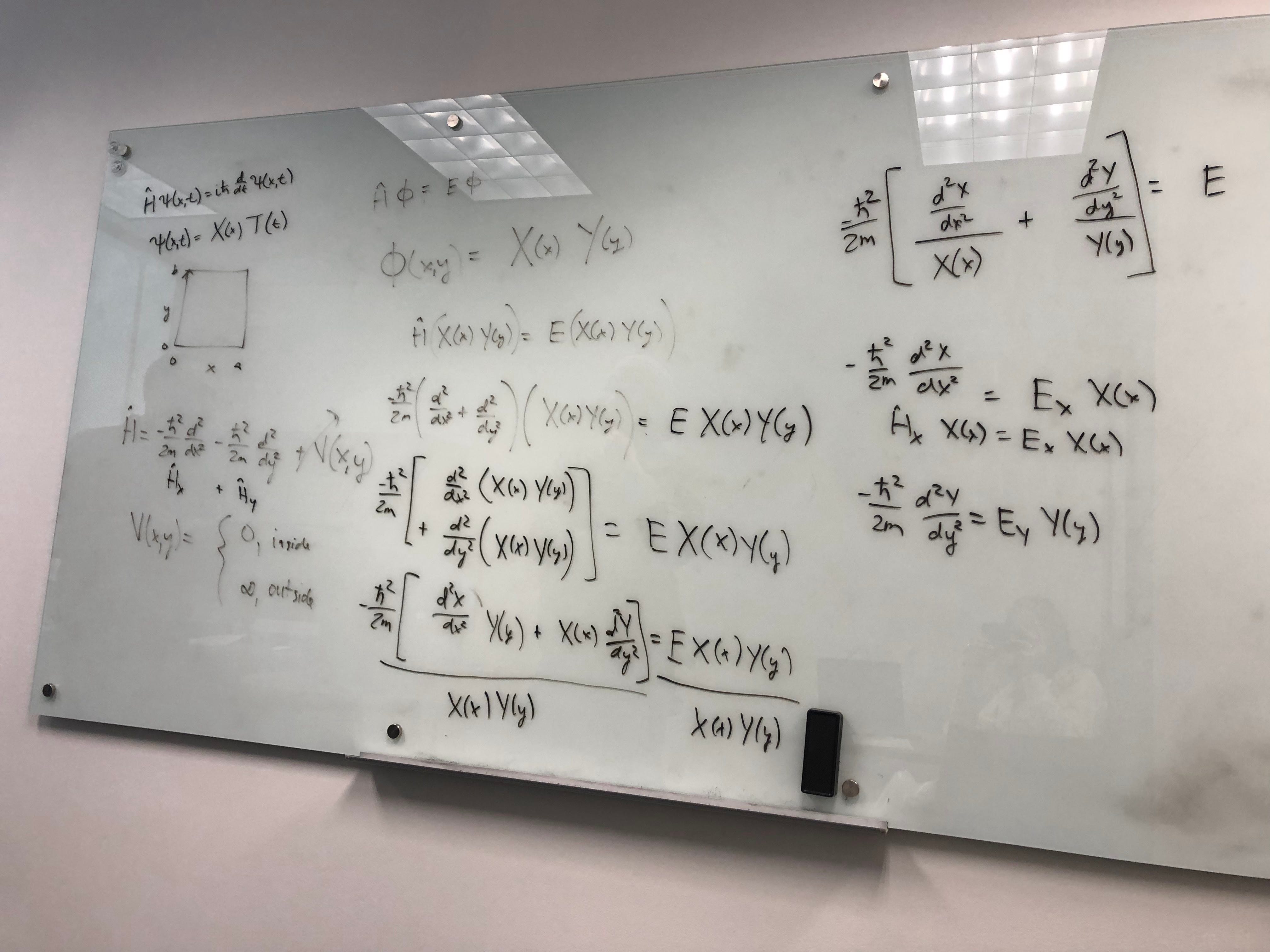
I don’t go home and start reading the textbook or the lecture slides right away; I dive straight into Problem 1, and work backwards.
Even if it reads like gibberish, I start by picking apart the question. What does it want—a derivation? A solution? A one word answer? Then I look for what topics I recognize from class and go down the list of resources to get it done from there.
First, I check my mind for what I remember from class, then I head to the textbook to find any relevant passages or example problems. If I’m still confused, I’ll search for a Youtube video or online article to fill in the gaps. This step can take anywhere from one example to three chapters, so I try not to rush and focus on the understanding.
That is the biggest tip I can give you: let it take forever, let the solution be ugly, let it take three pages, but never let it be something ‘to just get done’. Don’t copy an answer without knowing where it came from or skip a derivation you don’t want to do it.
“Oh, I just need to get this done, I’ll understand it later.” When is later? During the exam?
I don’t think so. Stick with it until you get it.
Exams
Lectures and homework are for stocking my filing cabinet; Exams are for using it.
Now it’s time for the real thing: Can I see a problem, come up with a solution, and get to it on my own?
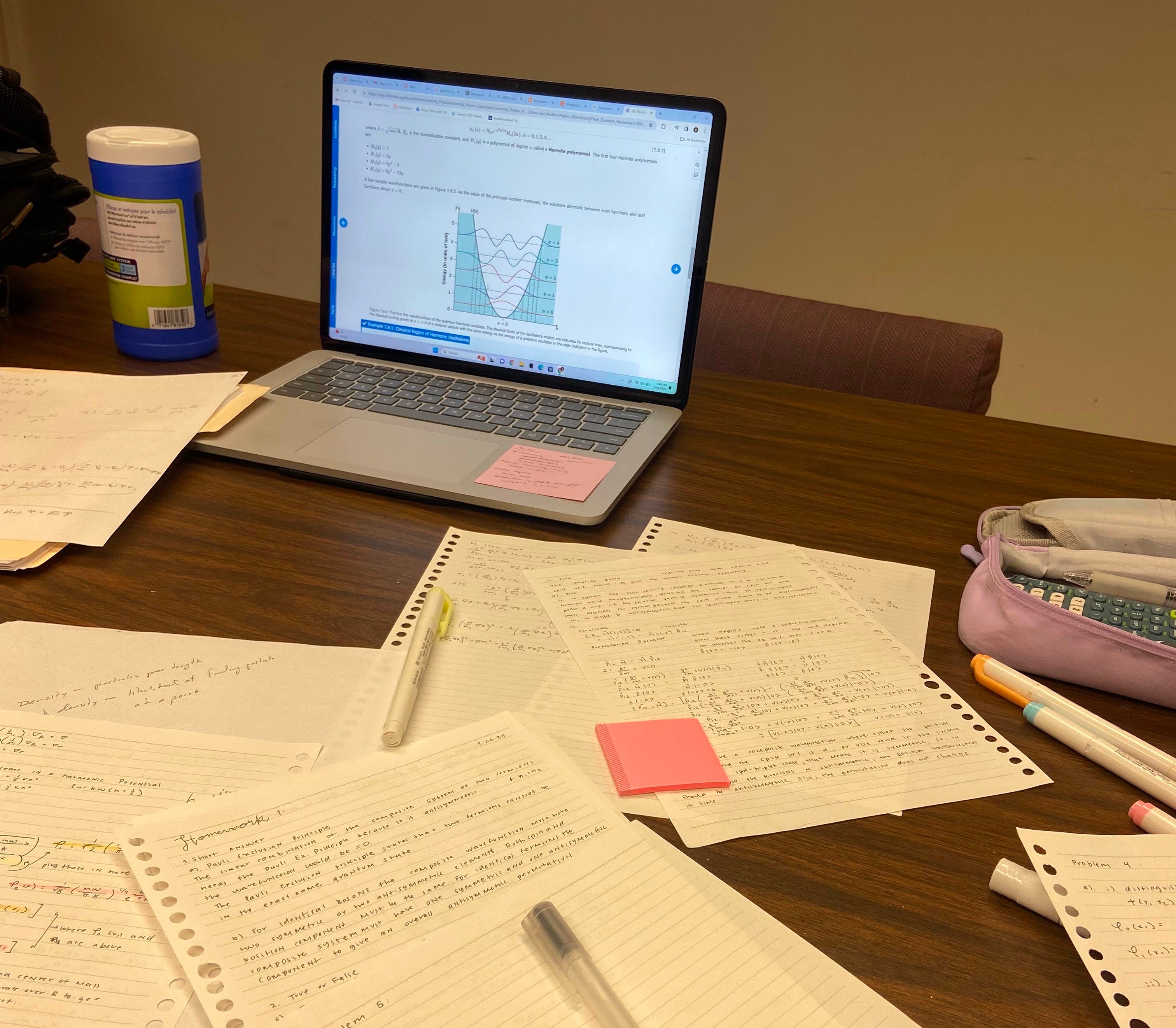
The only way I know how to prepare for this is to do it over and over again. I go over all the homework problems, the textbook problems, and in-class exercises and make sure I’ve seen every type of question and filed away every approach into my filing cabinet. Then, I go back and fill any gaps or half-baked understanding with another reading of the textbook or better yet, office hours.
Once I solve every problem I’ve ever encountered without help—I’m ready.
Chances are, the exam is going to be some version of the problems I’ve seen before, but with an extra curve-ball. The trick is being able to catch it. If I’ve done the work, it’s relatively easy to catch, but you really have to do work to catch it.
See, solving problems are like building muscles. You can lift heavy weights in the gym, but the real growth doesn’t come from lifting the heaviest weight. It comes from the little bit of weight you add on after the heaviest weights.
That’s what a professor is doing in an exam: pushing you farther than you think you can go. But that’s the point; that’s how you learn.
So no matter how nerve-inducing they are, exams for me are always exhilarating.
I always leave feeling like: Woo! I did it! I learned!

Thank you for joining me for this first article of The Learning Lab: this is where I intend to focus on teaching how to learn science rather than just learning science.
This opportunity is very dear to me because I would love to have something like this when I started college; I wasn’t a “stem person” until I got there, so as much work into learning how to learn science as the science itself.
I hope someone might be able to benefit off what I learned, so I am grateful to get this down and out into the world. If you know someone who might enjoy—spread the learning!
I hope you will join me for the next one.
See you then!
Enjoyed this article??? Interested in supporting more fun science content?? Buy me a coffee here!
I love STEM subjects but I’m pretty afraid of them so I hope this helps me a bit. Thank you!
Totally agree with the idea of training your muscle like a brain. Think that's the right way to think about it. Reading or studying or playing games every day should definitely help keep things sharp.